
Learn · Hair Science
Frizz & curls go hand in hand.
If your hair curls, it frizzes, and that's completely normal. Here's why the two come as a pair, and the one simple step that keeps them in balance.
The curlier the strand, the harder oil travels
Quick answer
Frizz and curls go hand in hand. The curved follicle that gives you waves and curls also stops natural scalp oil travelling down the strand, so curly hair is naturally drier and more prone to frizz. A little frizz is normal. To keep it soft and your curls defined, add moisture: apply a leave-in to wet hair so it holds onto that water, rather than putting a serum on dry hair.
The truth
Got curls? You've got some frizz.
Frizz often gets treated as the enemy, something to fight with heavier and heavier products. But frizz and curls share the same root cause: the shape of the strand. The bends that make curls beautiful are the same bends that leave them dry and ready to lift.
So the goal isn't zero frizz. It's balance: enough moisture that your curls group together and hold their shape, with a soft halo instead of a frizzy cloud. And if you've always thought your hair was “just frizzy”, there's often a wave or curl pattern underneath, waiting for that moisture.
Fig. 1It starts at the root
Your curl pattern is set by the shape of the follicle your hair grows from. The more curved the follicle, the flatter the strand and the tighter the curl.
Straight
Round follicle, round strand
Grows straight up and out. Nothing slows oil down on its way to the ends.
Wavy
Curved follicle, oval strand
Grows in loose S-bends. Oil makes it part of the way before the first turn.
Curly & coily
Hooked follicle, flat oval strand
Grows in spirals. Every turn is a roadblock, so the lengths and ends miss out.
So what actually is frizz?
Your scalp makes its own conditioner: sebum, a natural oil. On straight hair it slides from root to tip. On curls it gets stuck at the bends, which is why curly hair is naturally drier, especially towards the ends.
01
Oil can't reach
The curve of the strand stops sebum travelling down it, so the lengths stay dry.
02
The cuticle lifts
Dry hair's outer layer roughens and opens up instead of lying flat and smooth.
03
Strands go searching
Thirsty hair pulls in moisture from the air, swells unevenly and breaks away from its curl group.
Think of it like skin
Dry skin gets moisturiser. Dry curls do too.
when your skin is dry
You reach for face cream.
when your hair is dry
You need a leave-in, on wet hair.
Side by side
Serum isn't moisture
Serums and oils have their place, for shine and slip once your hair is already hydrated. But on their own they can't fix dry curls, because they add no water.
Serum on dry hair
sits on the surface
Coats the outside of the strand for a smoother look, but the hair underneath stays as dry as it was. Frizz tends to come back as soon as the air turns humid.
Leave-in on wet hair
holds the water in
Water is the moisture. Applied while hair is still wet, a leave-in helps the strand hold onto it, so curls stay hydrated, clump together and keep their shape.
“
“Won't a leave-in make my hair greasy?”
Not if it's the right one, in the right amount, on wet hair. Greasiness usually comes from heavy products layered onto dry hair, where they sit on top with nothing to hold onto. A lightweight, buildable leave-in works with the water: start small and add more only where your curls ask for it.
The fix
Curls defined, frizz in balance, in one simple ritual
The Style + Treat™ Curl Activator is a lightweight crème-gel leave-in. It hydrates with flax seed extract and cold-pressed tamanu oil, then holds your curls in shape, all in one step.
Simple Curl Care
moisture first, every time
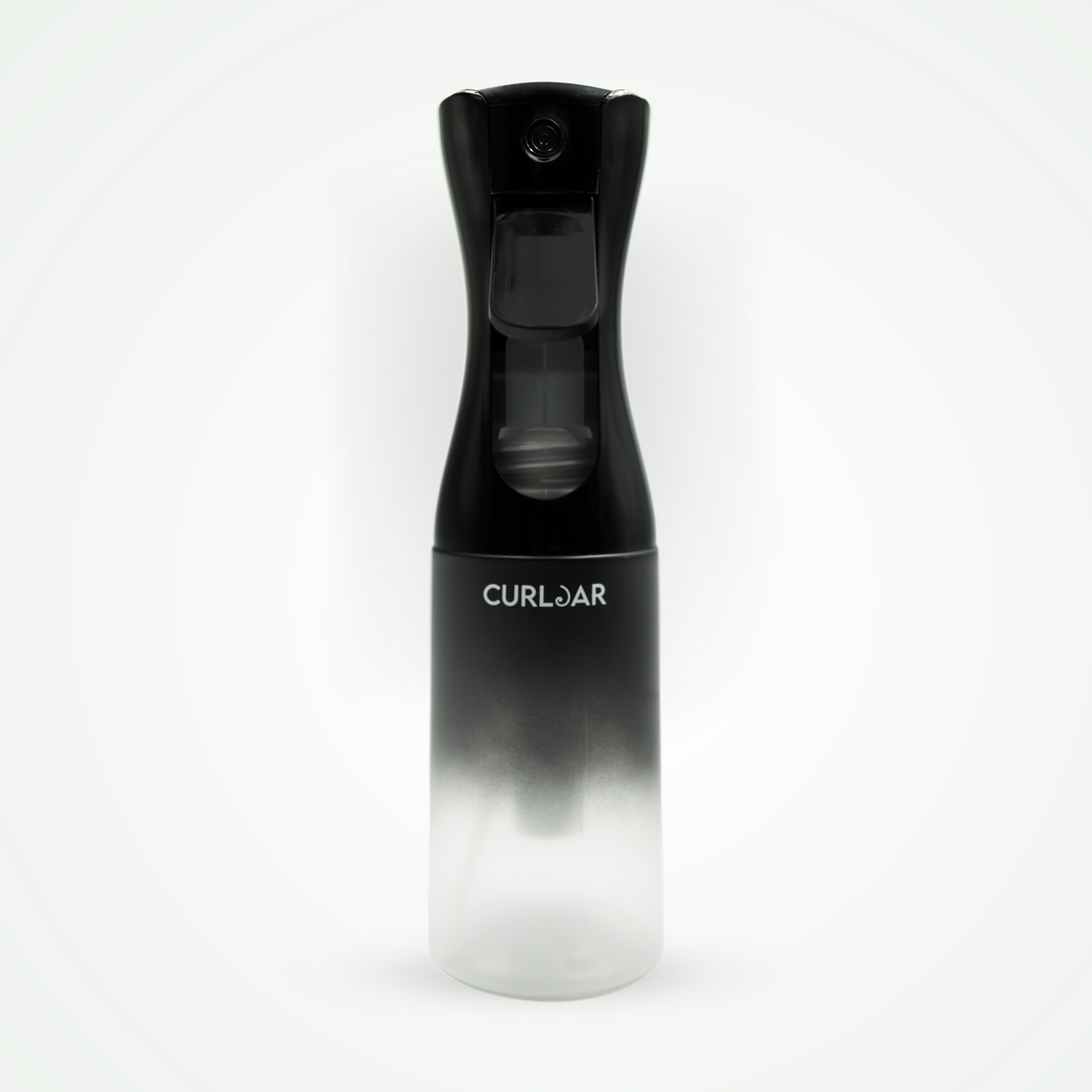
- 01Start wetStraight out of the shower, or mist hair evenly with water. A fine mist like our Nano Mist Bottle spreads it best.
- 02Apply the leave-inWork the Curl Activator through section by section while hair is still wet. Start small and build where you need it.
- 03Scrunch and leave itScrunch upwards to encourage your pattern, then air-dry or diffuse, and keep your hands off while it dries.
Day two, three or four? Mist with water to re-activate, then add a little diluted product only if you need it.

For curl types 2A–4C
Frizz and curls go hand in hand. Moisture is what keeps them in balance.
Good to know
Frizz FAQs
Is it normal for curly hair to be frizzy?
Yes. Frizz and curls go hand in hand. The curved follicle and oval strand that create waves and curls also make it harder for natural oil to travel down the hair, so curly hair is naturally drier and more prone to frizz. A little frizz is normal, and moisture keeps it soft and helps curls group together.
Why is curly hair drier than straight hair?
Curly and wavy hair grows from a curved follicle and has a flatter, more oval strand. Natural scalp oil (sebum) slides easily down a straight strand but struggles to travel around every bend of a curl, so the lengths and ends get less of it.
Should I use serum or leave-in for frizz?
For dry, frizzy curls, start with a leave-in on wet hair. Water is what moisturises, and a leave-in helps hold it in. A serum or oil on dry hair sits on the surface for shine and slip, but it adds no water.
Will a leave-in make my curls greasy?
Not when it suits your hair and you use the right amount on wet hair. A lightweight, buildable formula like the Style + Treat™ Curl Activator can be built up where you need it without weighing curls down.
How do I refresh frizzy curls between wash days?
Mist your hair with water to re-activate it, scrunch, and add a little diluted Curl Activator only where you need it. It's light enough for up to four refreshes between wash days.
Curls and frizz, in balance.
Moisture first, with the Style + Treat™ Curl Activator.
Shop Curl Activator How to apply